Health
Toddler constipation: what to try and when to call
Updated
Hard stools and skipped days often show up in the toddler years, around new foods, less fluid, a busy schedule, or toilet training. This is not a diagnosis and it is not a ranking of “good” or “bad” parenting. It describes what constipation can look like, what is reasonable to try with ordinary fluids, movement, and fiber-containing foods, and which signs mean you should call the pediatrician promptly rather than wait.
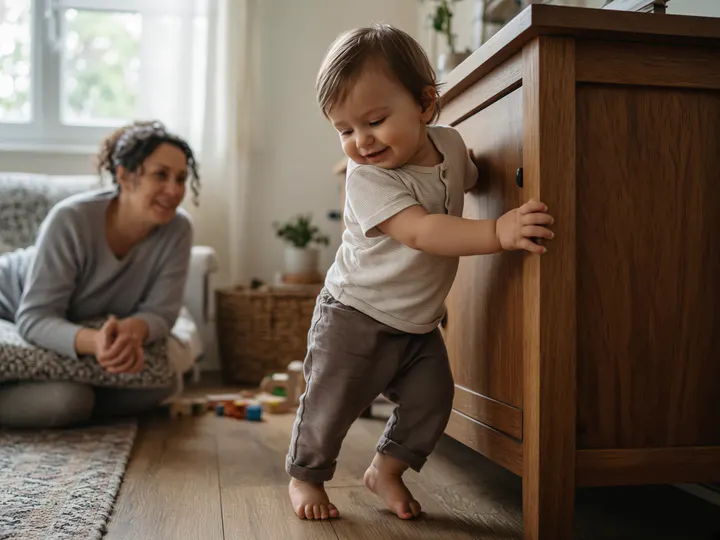
Everyday fluids and fiber-containing foods, not improvised treatments
Call first if your child looks unwell
If your child is in significant distress, skip home experiments and get medical help. Contact the pediatrician promptly—or emergency care if your child looks very sick—when you see any of the following:
- Belly pain that is severe, worsening, or keeps your child from playing or sleeping
- Blood on the stool, in the diaper, or a stool that looks black
- Vomiting, especially if it is repeated or the belly looks tight
- Fever
- A belly that looks severely swollen or feels hard
- Signs of dehydration, such as far fewer wet diapers or pees than usual, a dry mouth, no tears when crying, or unusual sleepiness
- Constipation that persists after you have offered fluids, movement, and ordinary fiber-containing foods, or that keeps returning
The National Institute of Diabetes and Digestive and Kidney Diseases (NIDDK) and the American Academy of Pediatrics (AAP) both treat these as reasons to get medical advice rather than to keep adjusting diet alone. You do not need a label first. If you are unsure whether the situation is urgent, call.
What constipation can look like
Clinicians often talk about constipation when stools are hard, dry, pebble-like, or painful to pass, or when bowel movements happen much less often than is usual for that child. Some toddlers strain, cry, or refuse the potty. Some pass a very large stool after several days. Some have a soft smear or leak in underwear even while a hard stool is still sitting in the rectum; that pattern is a reason to check in, not a reason to assume the child simply has diarrhea.
There is no single “correct” number of daily stools that proves a toddler is well. NIDDK notes that some children go every two or three days and stay comfortable if the stool is soft. The useful question is whether going is hard, painful, or a clear change for your child.
Withholding is common at this age and is not misbehavior. After one painful stool, a child may try not to go again—crossing legs, hiding, rocking, clenching, or saying they do not need to poop. AAP family materials note that toilet training, a new childcare routine, travel, or illness can make that cycle more likely. Appetite can dip when the belly feels full. Mood can be off. Those are observations to share with the pediatrician. They are not a verdict on the child.
What is reasonable to try at home
If your toddler is otherwise well—drinking, peeing, playing, and without the warning signs above—families are usually steered toward three ordinary supports: fluids, movement, and foods that already contain fiber. These are habits, not a protocol. They do not replace care when symptoms are severe or they persist.
Fluids
Offer water regularly through the day, including with meals. Milk still belongs in many toddler diets, but large volumes can crowd out fruit, vegetables, and grains. CDC infant-and-toddler nutrition guidance treats water and milk as the usual drinks after the first birthday. It does not treat juice as a required daily drink.
Do not force large amounts. A familiar cup, sips with food, fruit with a high water content, and soup are a reasonable start. Call promptly if you cannot get fluids in and wet diapers or pees are falling off.
Movement
Active play helps many toddlers keep stool moving. CDC physical-activity guidance for young children emphasizes plenty of movement throughout the day, not a formal workout. Walking, dancing in the kitchen, climbing, and chasing a ball all count. A long stretch in a car seat or stroller is a reason to build in a wiggle break, not a reason to blame yourself.
Ordinary fiber-containing foods
Fiber comes with food. You do not need a special product. NIDDK and AAP family pages point to fruits, vegetables, beans, and whole grains. Practical options include pear, berries, kiwi, or prune as fruit; peas, broccoli, or cooked carrots; beans or lentils in a texture your child already accepts; and oatmeal or whole-wheat toast if those foods are already on the menu.
Pair fiber with fluids. A dry cracker with no water is not the goal. Keep offering foods the child already eats, and put one fiber-containing food on the plate without a battle. A short menu is not a failure; the pediatrician can help you work with what your child will actually eat.
Whole fruit is usually a better first step than juice because the fruit still has fiber. You do not need a juice regimen, and you should not treat juice as medicine.
Toilet timing, without pressure
If your child is using a potty or toilet, a short sit after a meal can catch the urge that often follows eating. Feet should be supported on a stool so the child is not dangling. A few calm minutes is enough. Getting off without a stool is not a failure.
If your child is still in diapers, you do not have to start training in order to address hard stools. Painful stools are a reason to slow training down, not speed it up—an approach AAP toilet-training guidance supports when children are afraid or hurting.
Do not punish soiling or withholding. Those are usually signs the body is uncomfortable.
What not to try
Do not improvise laxatives, mineral oil, herbal “cleanse” mixes, suppositories, or enemas. Do not use an adult product, a leftover prescription, or a dose from a parent group. AAP family guidance is explicit: medicines and enemas belong in the plan only when a clinician has recommended them for your child.
Do not put soap, a thermometer, or anything else in the rectum to “stimulate” a stool. Do not restrict food as a test. Do not wait out severe pain, blood, vomiting, fever, a badly swollen belly, or a child who looks dehydrated.
If a clinician later recommends a medicine, use only that plan. This article will not give doses.
Related reading
Check in if
Call your pediatrician’s office if warning signs appear, if stools stay hard or infrequent, if your child is avoiding the toilet because it hurts, or if you are seeing leaks you cannot make sense of. You are not bothering them.
When you check in, it helps to share:
- What stools have looked like, and over how many days
- Whether there is pain, blood, vomiting, fever, or belly swelling
- What your child is drinking and eating, including milk
- Wet diapers or pees, and whether energy and play are normal
- Any recent illness, travel, or change in toilet training
Ask what to watch for overnight and when to use urgent or emergency care. If the office is closed and your child is in significant pain, vomiting, or looks dehydrated, use the after-hours line or emergency care instead of waiting.
Related ages: 12-18 months, 18-24 months, 24-36 months. Pillars: Food.
Sources
- NIDDK, Constipation in Children. Describes infrequent or hard, dry, difficult-to-pass stools; notes diet, fluids, and activity as common supports; and lists blood, severe pain, vomiting, swelling, and symptoms that last as reasons to seek care. https://www.niddk.nih.gov/health-information/digestive-diseases/constipation-children
- American Academy of Pediatrics / HealthyChildren.org, Constipation. Notes that constipation is common in toddlers, that withholding after a painful stool is common, that fiber-containing foods and fluids are first-line family steps, and that laxatives and enemas should not be used unless a doctor recommends them. https://www.healthychildren.org/English/health-issues/conditions/abdominal/Pages/Constipation.aspx
- CDC, foods and drinks for young children, plus physical-activity guidance. Treats water and milk as usual drinks after age 1, does not require daily juice, encourages fruits, vegetables, and grains, and recommends active play throughout the day. https://www.cdc.gov/nutrition/infantandtoddlernutrition/foods-and-drinks/index.html